
Landing page vs website: a guide to choosing the right website for your business
The term ‘landing page’ can mean different things to different people.
Many people contact me asking for a landing page, but they actually mean a website. Others ask for a website when a landing page would be the perfect place to start.
What is a landing page?
Traditionally, a landing page is a single web page designed with one clear goal.
That goal might be to encourage visitors to enquire about a service, book an appointment or register for an event, just to name a few examples.
Unlike a traditional website, a landing page keeps visitors focused on taking one specific action rather than browsing multiple pages. That's why they are commonly used in online advertising and marketing campaigns.
Today, however, many people also use the term landing page to describe a one-page website, which is where the confusion begins.
What is a one-page website?
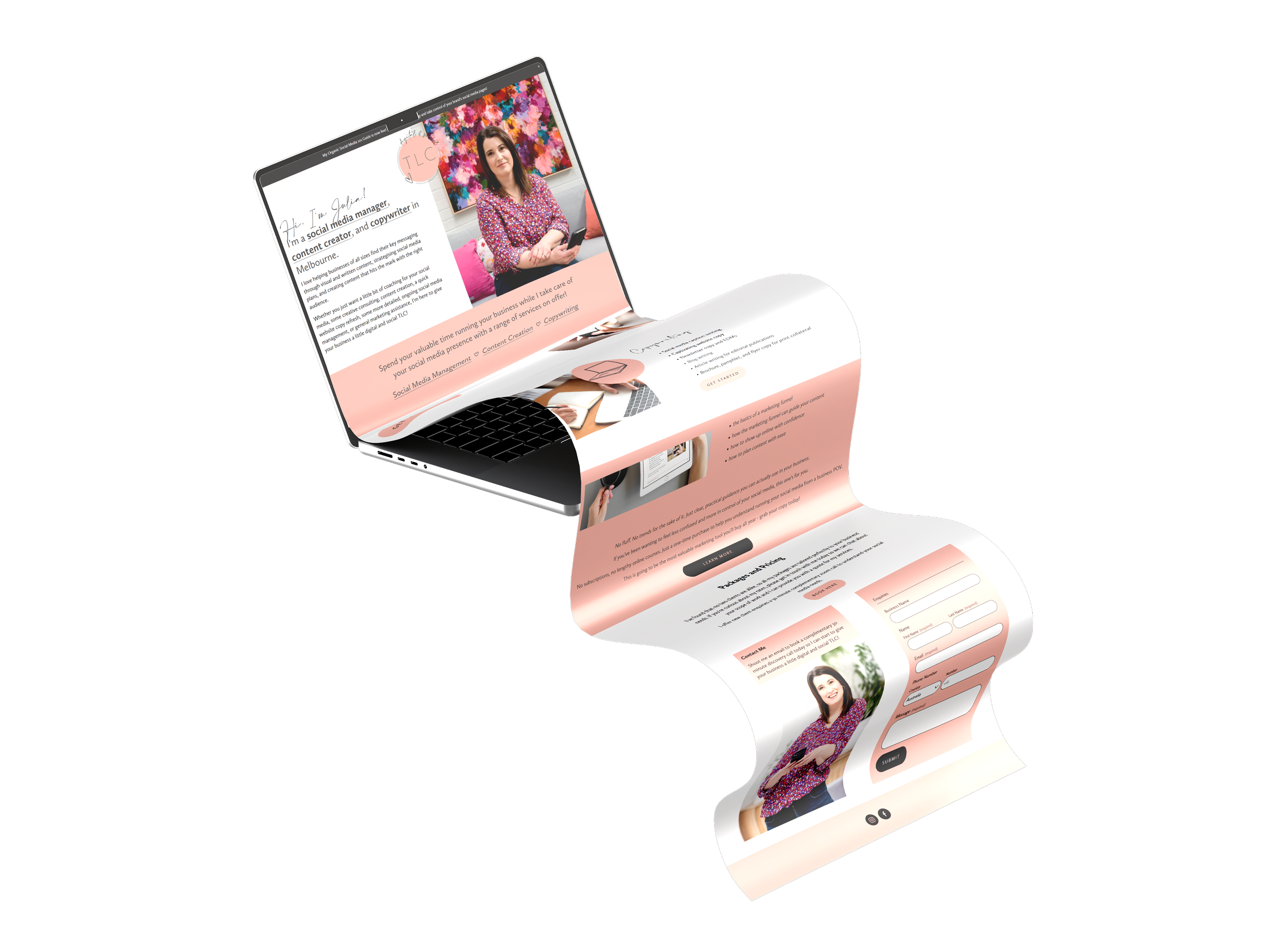
A one-page website places all of your business information onto a single scrolling page.
Instead of separate pages for Home, About, Services and Contact, everything appears one after another as visitors scroll down the page.
A typical one-page website might include:
Hero banner – a strong opening section with a professional image, clear heading, short introduction and a call-to-action button.
About your business – a brief overview of who you are, what you do and what makes your business different.
Services – a summary of your services with a short description of each one.
Testimonials – client reviews, often displayed in a slider or grid, to help build trust.
FAQs – answers to common questions that help visitors quickly find the information they're looking for.
Contact or booking section – a contact form, booking button or links to call, email or enquire.
Location and social links – your service area, map (if relevant) and links to your social media profiles.
It is still a fully functioning website, it just happens to have everything organised on a single page.
You can see some examples of one-page websites in my recent projects here.
What is a full website?
Many people refer to this as a "landing page", when they are actually describing a simple multi-page website with a homepage, service information and contact page – this is where much of the confusion comes from.
A full website is made up of multiple pages that help visitors learn about your business, your services and your expertise. Most businesses start with a basic five-page website (for example, Home, About, Services, FAQs and Contact), but it can easily grow over time as your business evolves.
Unlike a one-page website, a full website includes a navigation menu and a clear site structure, allowing visitors to explore different topics in more detail. You can create dedicated pages for each service, answer common questions, showcase your work, publish blog articles or case studies, and add new content as your business grows.
Having multiple pages also provides more opportunities for search engine optimisation (SEO), as each page can target different keywords and topics. Over time, this can help improve your visibility in Google and AI search results while giving potential clients a better understanding of what you offer.
What is a business card website?
A business card website is even simpler than a one-page website - think of it as your digital business card.
It typically includes your business name, what you do, a brief introduction, contact details, a photo or logo, and sometimes a contact form.
Unlike a coming soon page, which is usually a temporary holding page, a business card website is a simple but professional online presence. It is ideal while your full website is being developed or if you're just starting your business and want to secure your domain name, start networking and give people somewhere to learn more about you.
See an example of a business card website → https://www.stephenread.com.au/
When should you choose a landing page?
A one-page website is often the right choice if you are launching a new business, have one core service, need an online presence quickly or simply do not have enough content for a larger website yet. It is also ideal if most of your enquiries come through referrals or social media and you need a professional place for people to learn more about your business and get in touch.
Landing pages work particularly well for many service-based businesses, including consultants, coaches, photographers, tradies, health professionals, creatives and new start-ups.
When should you choose a full website?
A full website is usually the better choice if you offer multiple services, want dedicated pages for each service, plan to publish blogs, case studies or portfolio work, or want to improve your long-term visibility in Google and AI search.
It also gives your business room to grow by allowing you to add new pages, services and content over time without needing to redesign your website.
Which option is right for your business?
There is no one-size-fits-all answer. The right choice depends on where your business is today, how much content you have and where you see your business heading in the future.
Many businesses start with a business card website or one-page website and expand it over time, while others benefit from launching with a full website from the beginning. The important thing is choosing a solution that suits your current stage while allowing flexibility as your business evolves.
Because I build websites in Squarespace, it is easy to expand a one-page website into a full website over time. The original page often becomes the homepage, with a navigation menu and additional pages added for services, FAQs, blogs, portfolios or any other content your business needs.
Every website is customised to suit your business today while allowing room to grow in the future.
The table below summarises the main differences between each option.